

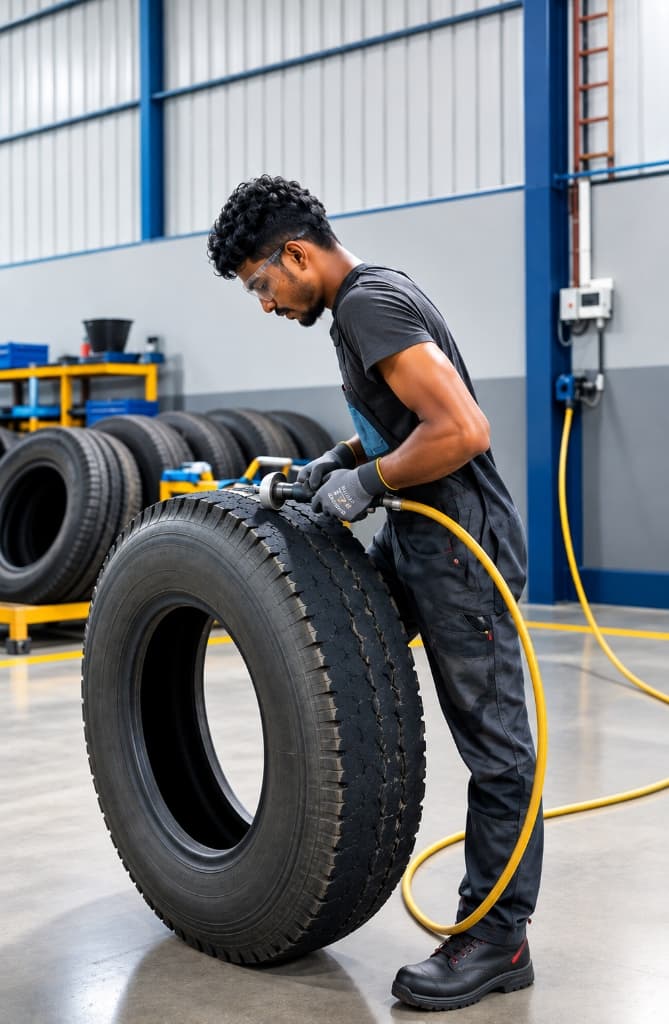
Key Highlights & Takeaways
- Rib-style patterns (D1, RTS, High WAY) maximize fuel efficiency and lateral stability on high-speed paved expressways.
- Lug patterns (S LUG, J LUG) offer superior torque transfer in muddy agricultural and quarry environments.
- Selecting the correct pattern for steer, drive, and trailer axles avoids premature irregular heel-and-toe wear.
1. Axle Geometry and Tread Physics
Every axle position on a commercial vehicle subjects a tyre to fundamentally different stress vectors. Steer axles demand high directional precision and rapid water evacuation to prevent hydroplaning; drive axles require robust torque transmission without rib tearing; and trailer axles must withstand severe lateral scrubbing during tight turns.
Matching the appropriate tread pattern from the Autoways catalogue ensures that tyres wear evenly down to the minimum allowable depth without sacrificing driver comfort or braking safety.
2. Rib vs. Lug Patterns: When to Specify Each
D1 & High WAY Treads: Featuring continuous circumferential grooves and dense siping, these patterns offer minimal rolling resistance, quiet operation, and enhanced fuel economy. Ideal for long-distance highway transport and passenger coaches.
S LUG & J LUG Patterns: Incorporating deep transverse grooves and heavy-duty shoulder blocks, these patterns deliver biting traction in soft soil, mud, gravel roads, and construction sites.
TBR (Truck Bus and Radial): A versatile all-wheel pattern offering a balanced compromise between drive traction and highway endurance.