
Key Highlights & Takeaways
- Tyres are one of the largest ongoing expenses after fuel for Sri Lankan buses, lorries, tippers, and agricultural fleets.
- A properly retreaded commercial tyre typically costs substantially less than a new tyre, delivering proven savings of 40% to 50% for heavy-duty applications.
- Safety depends entirely on three engineered disciplines: non-destructive casing inspection (shearography & pressure testing), in-house formulated cushion gum bonding, and batch-consistent tread rubber.
- Autoways has continuously supplied the Sri Lanka Transport Board (SLTB) for more than 20 years on high-mileage routes where tyre failure is unacceptable.
- The optimal fleet strategy is a hybrid: virgin new tyres on steering positions, and multiple retread lives on drive and trailer axles.
1. What Is a Retreaded Tyre?
For any transport operator in Sri Lanka, tyres are one of the biggest running costs after fuel. Buses, lorries, tippers and agricultural vehicles wear through them fast, and every replacement cycle takes a bite out of the budget. That is why the question comes up in almost every fleet office: should we keep buying new tyres, or retread?
At Autoways, we have been retreading tyres since 1991, starting with 12 workers in Anuradhapura and growing into an island-wide operation. In that time we have supplied the Sri Lanka Transport Board for more than 20 years. This guide gives you a straight comparison of retreaded and new tyres, covering cost, safety, and the myths that still put fleet owners off.
A tyre has two main parts: the casing (the structural body) and the tread (the rubber that touches the road). On a commercial tyre, the tread wears out long before the casing does. A good casing is built to survive more than one life.
Retreading replaces only the worn tread. The result is a tyre with a fresh tread on a casing that has already proven itself on the road.
"A commercial tyre casing accounts for up to 70% of the tyre’s initial manufacturing cost. Retreading preserves that structural investment by replacing only the worn tread layer."
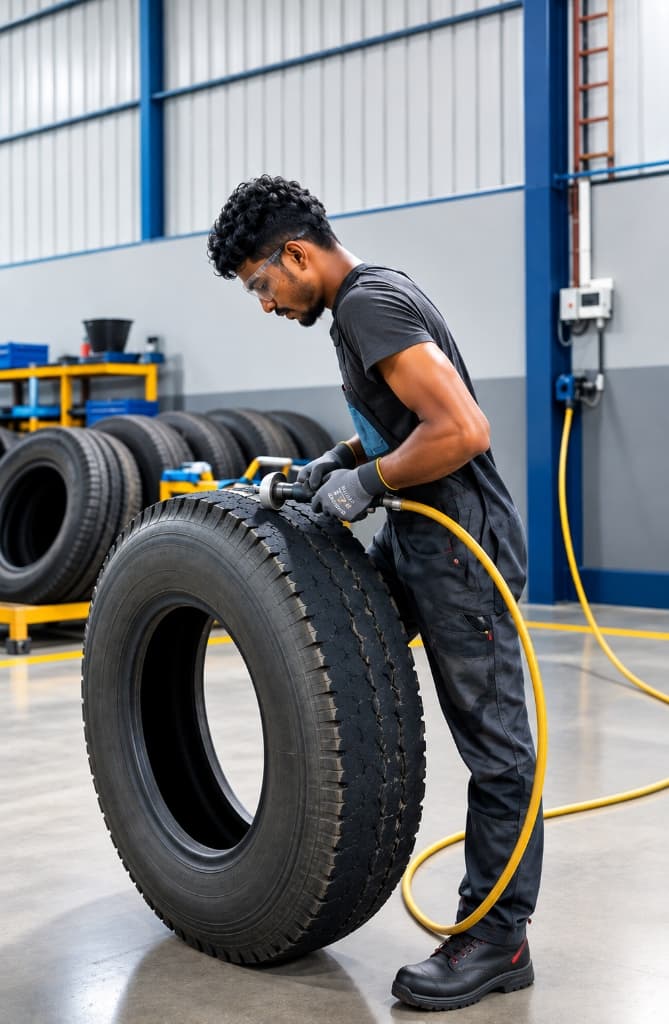
- Inspection: Each casing is checked for damage, age, and suitability. Casings that are not fit for retreading are rejected immediately.
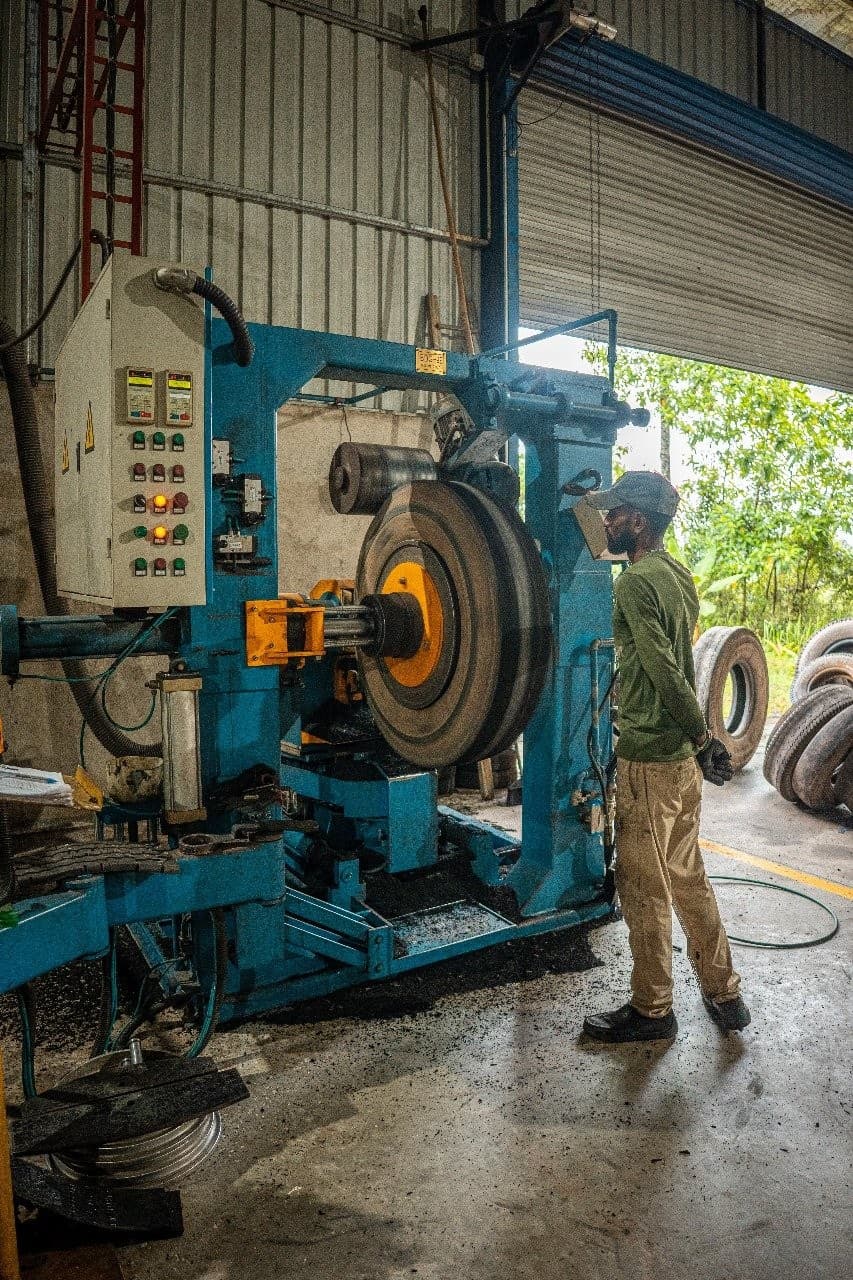
- Buffing and preparation: The old tread is removed to calibrated radius tolerances and the casing surface is prepared.
- Bonding: A precision layer of formulated cushion gum is applied, and a new tread is bonded to the casing.
- Curing: Heat and pressure set the new tread (hot cure) or a precured tread is bonded on under controlled chamber pressure (cold cure).
- Final checks: The finished tyre goes through thorough inflation testing and surface inspection before it leaves the plant.
2. Cost: Where Retreading Saves Money
Price is the main reason fleets look at retreading. A retreaded commercial tyre typically costs substantially less than a new premium tyre, and savings in the range of 40% to 50% are commonly cited for heavy-duty tyres.
The savings add up across a fleet in three distinct ways:
For a company running dozens or hundreds of tyres across demanding Sri Lankan highways and provincial routes, that difference shows up directly in cost per kilometre.
- Lower cost per tyre: You are paying strictly for a new tread and the labour to fit it, not for a whole new steel-belted casing.
- Multiple lives from one casing: A well-maintained casing can often be retreaded more than once, so the original investment is spread over a much longer period.
- Predictable budgeting: When you plan retreading into your maintenance schedule, tyre spending becomes a steady, forecastable cost instead of a series of surprises.
3. Safety: What Actually Matters
Safety is the question every responsible fleet manager asks, and it deserves a direct answer: a properly retreaded tyre is safe for heavy-duty and long-distance use. The key words are properly retreaded.
The safety of a retreaded tyre does not depend on the fact that it is retreaded. It depends on three things:
Every finished tyre goes through final inflation testing and surface inspection before delivery. This is the same discipline that has allowed the Sri Lanka Transport Board to rely on our work for over two decades, on routes where tyre failure is simply not acceptable.
"Supplying the Sri Lanka Transport Board for over 20 years is proof that properly retreaded tyres endure the toughest daily passenger routes safely."
- Casing selection: Only sound casings should be accepted. Autoways uses inspection methods including shearography and pressure testing to check casing condition before retreading begins.
- Bonding quality: The bond between tread and casing is what holds the tyre together under load and heat. We formulate our own cushion gum in-house, which gives us direct control over bonding strength rather than relying on outside suppliers.
- Tread and compound quality: Our precured retreading belts and rubber compounds are made in-house, so the materials that go onto your casing are consistent from batch to batch.
4. Five Common Myths About Retreaded Tyres
Despite decades of proven real-world performance, outdated misconceptions still circulate among some fleet operators. Here is the engineering reality behind the five most common myths:
- Myth 1: "Retreaded tyres fail more often than new ones." — Tyre failures are most often caused by under-inflation, overloading, impact damage and poor maintenance, whether the tyre is new or retreaded. A quality retread on a sound casing performs reliably under the same conditions. When failures happen with poor retreads, the cause is usually a weak casing or a poor bond, which is a quality-control problem and not a flaw in retreading itself.
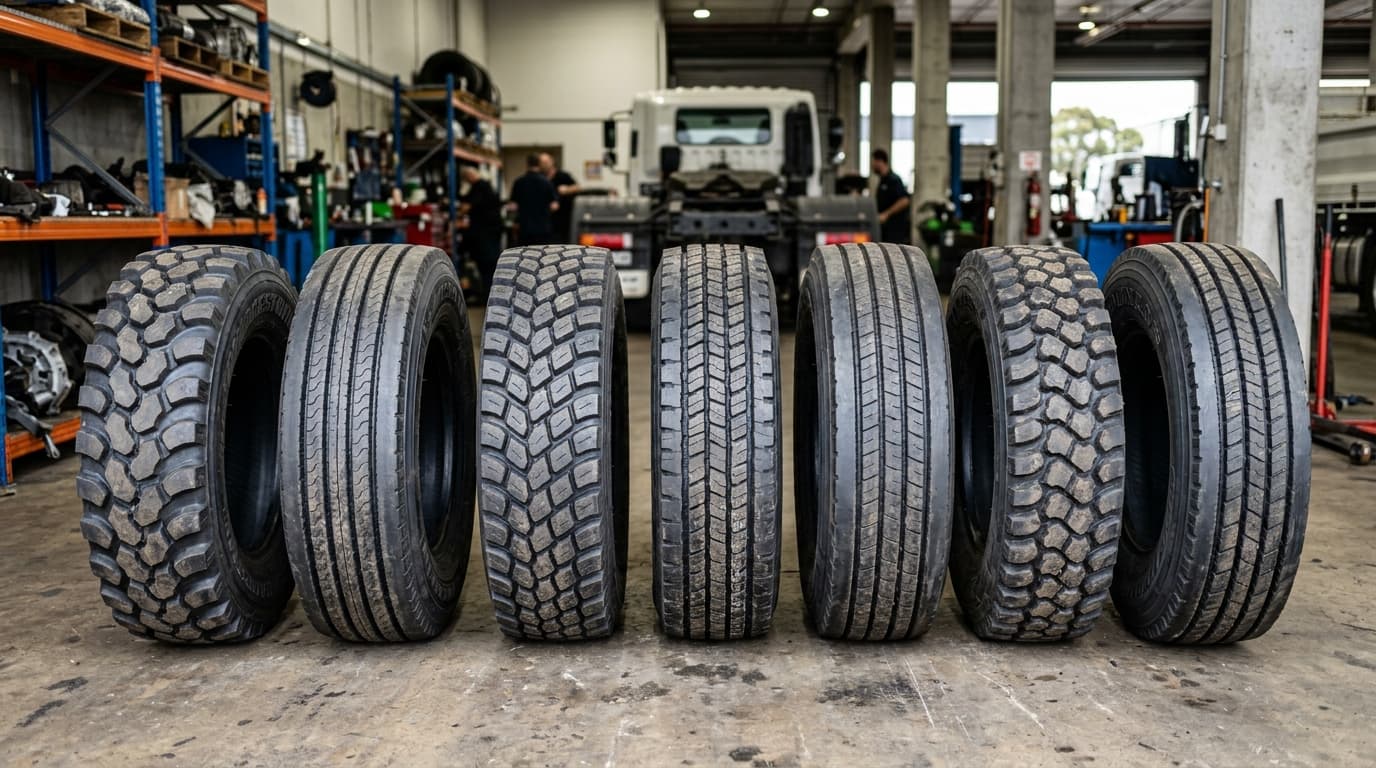
- Myth 2: "Retreads are only for low-speed or short-distance work." — This is not true for commercial tyres. Retreaded tyres run daily on buses, trucks and logistics fleets, including long-distance routes. The tread pattern should match the application, which is why we offer patterns such as TBR, S LUG, D1 (for higher mileage and comfort), RTS and MI.
- Myth 3: "Retreading is just sticking rubber on an old tyre." — Retreading is an engineered process. Inspection, buffing, cushion gum bonding, and controlled curing all affect the final result. Skipping or rushing any step is where quality is lost, which is why choosing an experienced, ISO 9001:2015 certified retreader matters.
- Myth 4: "A new tyre is always the better value." — A new tyre has a higher upfront price. If your casings are in good condition, retreading delivers a comparable working tyre for much less. The smartest approach for many fleets is to buy quality new tyres for the first life, then retread the casings when the tread wears down.
- Myth 5: "Retreading is the same as recycling, and it is only about the environment." — Retreading is good for the environment, but it is first a practical business decision. The environmental benefit comes on top of the savings.
5. The Environmental Case
Manufacturing a new tyre takes a large amount of raw material and energy. Retreading reuses the casing, which is the most material-heavy part of the tyre, so it significantly reduces the demand for new raw materials and cuts the number of used tyres heading for landfill or disposal.
For Sri Lankan operators, this is increasingly relevant. More customers, tenders and partners now ask suppliers and transport providers about sustainability. A retreading programme gives you a concrete, measurable answer.
6. When Should You Choose a Retread, and When a New Tyre?
The honest answer for most fleets is not "one or the other." It is a mix: new tyres where they are needed, and retreads where they deliver the best value.
- Retreading usually makes sense when: (1) The casing is sound, within a suitable age, and has no serious structural damage; (2) The tyre has worn down evenly through normal use; (3) You operate buses, lorries, trucks or other commercial vehicles with a regular maintenance routine; (4) You want to reduce cost per kilometre without compromising reliability.
- A new tyre may be the better choice when: (1) The casing has deep cuts, sidewall damage, or signs of internal failure; (2) The casing is too old or has been badly overloaded or run under-inflated; (3) The tyre is for a steering position or application where your own fleet policy requires a new tyre.
7. How to Choose a Retreader You Can Trust
Before sending your casings to any retreader, ask these critical questions:
- Do they inspect every casing? — A retreader that accepts everything is a red flag.
- Do they control their own materials? — In-house cushion gum and tread manufacturing means consistent quality.
- Are they certified? — Look for recognised quality management certification such as ISO 9001:2015.
- Do they have a proven track record? — Long-term supply to demanding customers, like national transport operators, is a strong signal.
- Can they match the tread to your operation? — A good retreader will recommend a pattern for your routes, loads and vehicle type.
- Can they collect and deliver? — For fleets, logistics matter. Autoways runs its own transport fleet and operates from Anuradhapura, Kandy and Kuruwita.
8. Frequently Asked Questions
Direct answers to common questions asked by commercial vehicle owners and fleet managers in Sri Lanka:
- Are retreaded tyres legal and approved for commercial vehicles in Sri Lanka? — Yes. Retreaded tyres are widely used on commercial vehicles in Sri Lanka, including by large operators such as the Sri Lanka Transport Board.
- How many times can a tyre be retreaded? — This depends on the casing's condition, how it was used, and how well it was maintained. Many good commercial casings can be retreaded more than once. Regular inspection will tell you when a casing has reached the end of its life.
- Can any tyre be retreaded? — No. Only casings that pass inspection are accepted. This is a sign of a responsible retreader.
- Do you retread both radial and bias ply tyres? — Yes. Autoways rebuilds both radial and bias ply tyres for light vehicles, heavy-duty applications and agricultural machinery.
- What is the difference between hot cure and cold cure retreading? — Hot cure applies and cures a new tread using heat and pressure, and is well suited to heavy-duty vehicles. Cold cure bonds a precured tread to the casing and is a cost-effective option for tyres with lower wear. We will cover this in detail in a separate article.
9. The Bottom Line
Retreading is not a compromise. When it is done on a sound casing, with quality materials and strict inspection, it delivers a reliable tyre at a much lower cost and with a smaller environmental footprint. For Sri Lankan fleets, it is one of the most practical ways to control running costs without cutting corners on safety.
If you would like help deciding which of your casings are worth retreading, or which tread pattern suits your routes, the Autoways team is happy to assess your tyres and recommend a plan.
"Contact Autoways: info@autoways.lk | 025 493 4956 | 025 493 4957 | www.autoways.lk — Plants in Anuradhapura, Kandy & Kuruwita"
Commercial Inspection & Fleet Operations
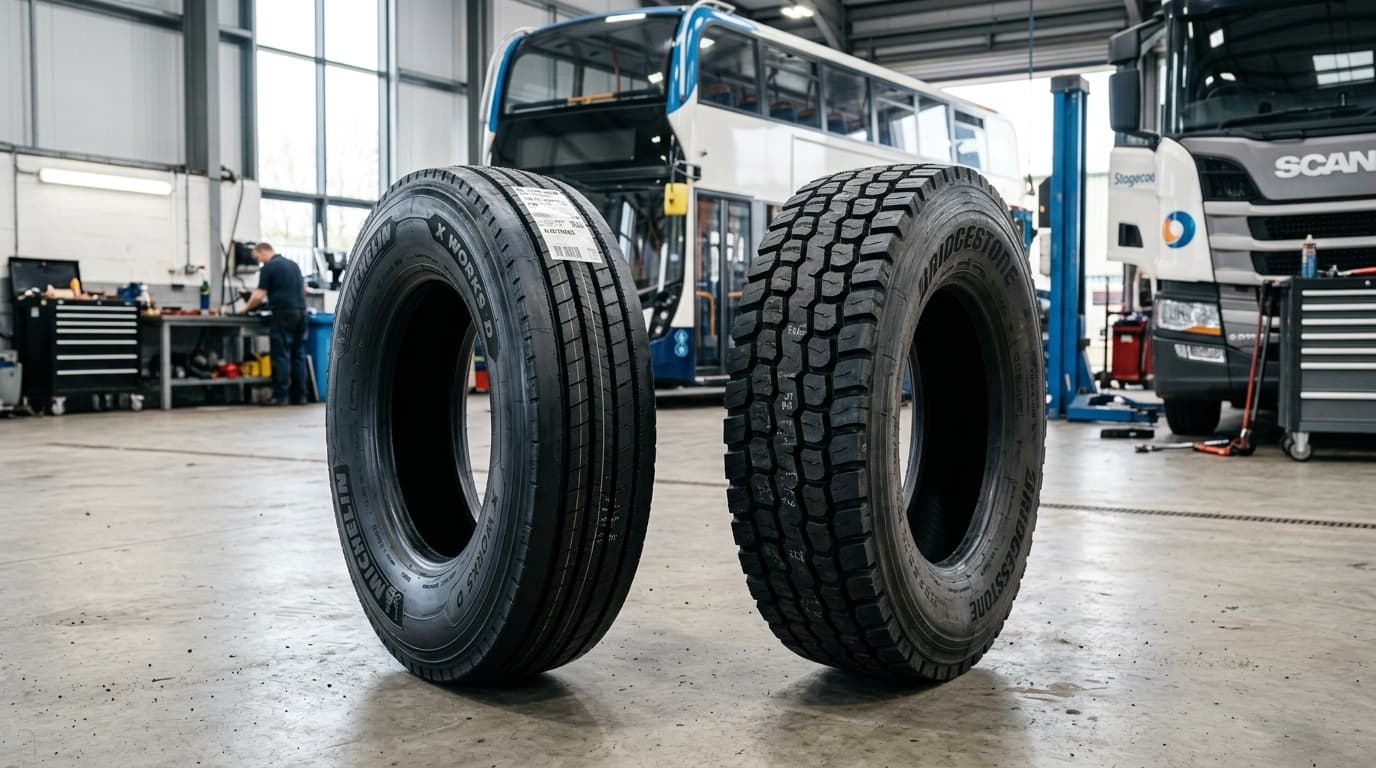
Side-by-side commercial comparisons, casing buffing inspection, and tread pattern selection for Sri Lankan transport operators.