
Key Highlights & Takeaways
- A tyre inner flap sits between the inner tube and the metal rim, taking friction, brake heat, and rough edges that would otherwise destroy the tube.
- Tube-type tyres are widely used on commercial trucks, buses, tractors, and agricultural vehicles across Sri Lanka.
- Flap failures stem from wrong sizing, reusing hardened/worn flaps, rust on metal rims, and under-inflation.
- Autoways formulates its own rubber compounds in-house, manufacturing 15" (0.825 kg), 16" (1.150 kg), and 20" (1.850 kg) heavy-duty flaps.
- Best practice for commercial fleets: Always fit a brand-new flap with every new inner tube to eliminate road downtime.
1. What Is a Tyre Inner Flap?
Most drivers have never seen a tyre inner flap, yet on a tube-type tyre it does one of the most important jobs. It sits quietly between the inner tube and the metal rim, taking the friction, heat and rough edges that would otherwise destroy the tube.
When a flap does its job, nobody notices. When it is missing, worn or the wrong size, the result is often a sudden tube failure on the road.
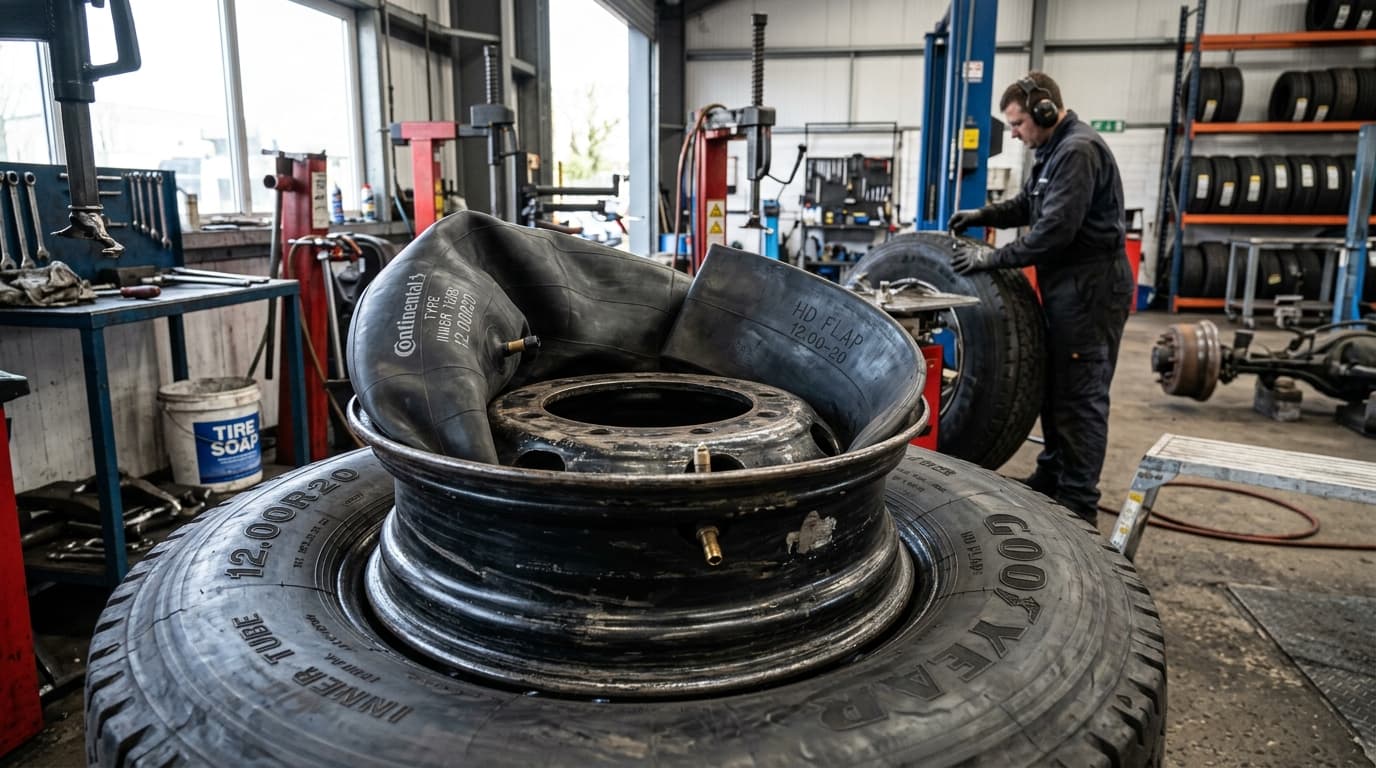
A tyre inner flap is a ring-shaped rubber liner fitted inside a tube-type tyre. It lies between the inner tube and the rim, covering the area of the tube that would otherwise rest directly against the metal.
Tube-type tyres are still widely used on buses, lorries, agricultural vehicles and industrial machinery. In these tyres, the air is held by a separate inner tube, and the rim is a bare metal surface with bolt holes, edges and welds. The flap is the barrier that keeps the soft tube away from that metal.
"Autoways manufactures tyre inner flaps for commercial and heavy-duty vehicles, alongside our retreading and rubber compounding operations in Anuradhapura."
2. What Does a Flap Actually Do?
A flap protects the tube in four ways:
"Together, these four protective effects mean fewer roadside failures, less downtime and a longer working life for both the tube and the tyre."
- 1. It prevents chafing and friction: As a loaded tyre rolls, the tyre, tube and rim all flex and move slightly against each other. Without a flap, the tube rubs against the rim surface and edges, and wears thin over time. The flap takes that wear instead.
- 2. It shields the tube from rim edges and punctures: Rim edges, seams, rust and valve-hole areas can all cut or pinch a tube. The flap puts a tough layer of rubber between the tube and those hazards, reducing puncture-related failures.
- 3. It reduces heat damage: Heavy loads and long distances build heat in the wheel area, and metal rims hold that heat. The flap helps protect the tube from direct contact with the hot rim and reduces friction-related heat build-up.
- 4. It helps maintain stable air pressure: A tube that is not being chafed or punctured holds air better. Stable pressure means smoother operation, better tyre wear and longer tyre life.
3. Why Flaps Fail
A flap is a simple part, but it works hard under severe dynamic stress, and it can fail or cause problems for several preventable reasons:
- Wrong size: A flap that is too small leaves part of the tube exposed. One that is too large can bunch up or fold, creating pressure points and friction heat.
- Reusing a worn flap: Flaps that are cracked, hardened, thinned or deformed no longer protect the tube. Reusing them with a new tube defeats the purpose.
- Poor-quality rubber: A flap made from inferior compound can harden, crack or lose its elasticity under road heat and heavy load.
- Rusty or damaged rims: Rust, burrs and sharp edges can cut through a weak flap and then attack the tube wall.
- Incorrect fitting: Wrinkles, folds, or a flap that is not seated correctly cause uneven pressure and accelerated wear.
- Under-inflation and overloading: These increase flexing and internal heat inside the tyre, speeding up wear on flaps and tubes alike.
- Moisture and dirt trapped inside: Water and grit trapped between the flap, tube and rim cause chemical corrosion and abrasive grinding.
4. What Makes a Good Flap?
Not all flaps are equal. Because the part is so simple, the quality is in the rubber and the manufacturing control.
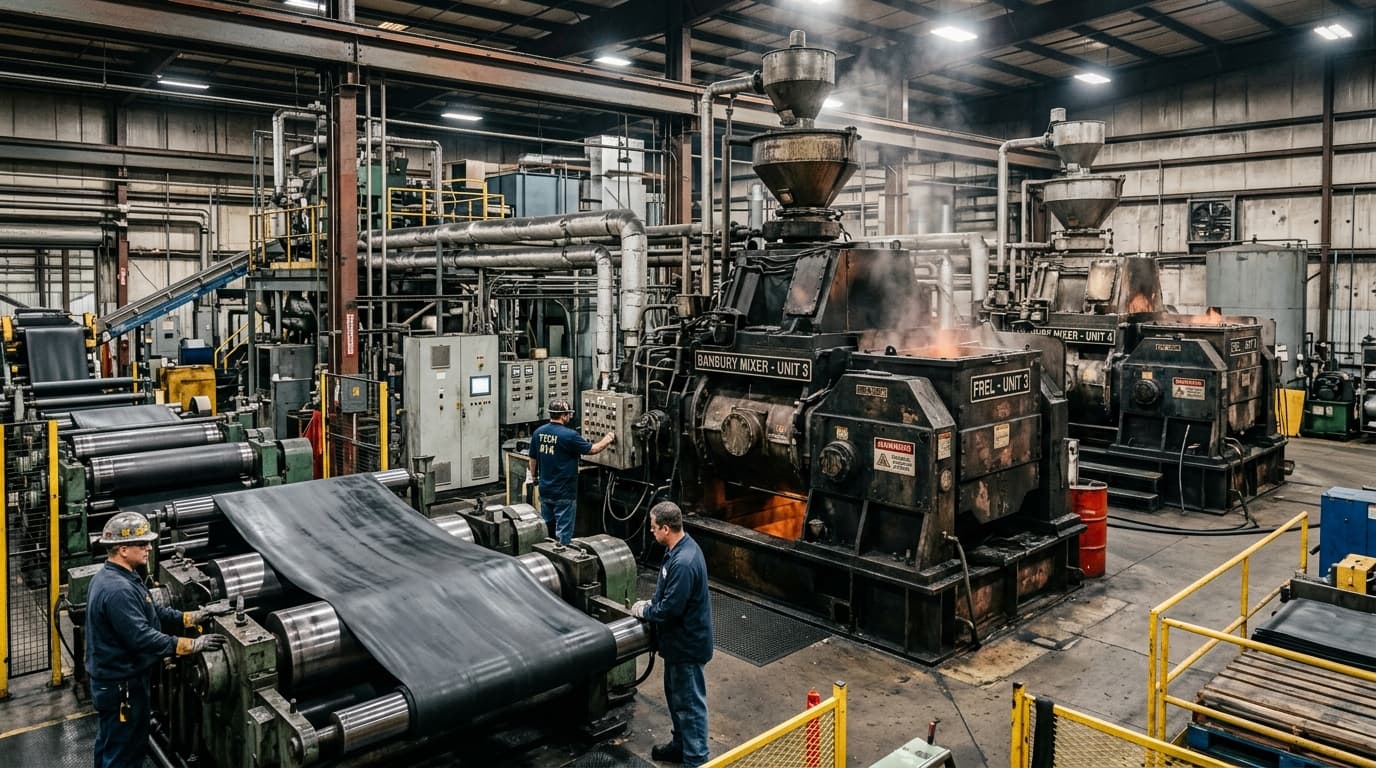
At Autoways, our flaps are made from carefully selected rubber compounds formulated in-house for resilience, elasticity and temperature resistance. We use controlled processing methods to keep thickness and tension consistent, and every batch is checked through laboratory and visual inspection for dimensional accuracy, strength and bonding integrity.
Because we run our own rubber compounding division, we control the material from the mixing stage. That level of control is difficult to match when a manufacturer buys compound from outside.
- A well-formulated rubber compound: Resilient, elastic and resistant to tropical road temperatures. The flap needs to flex constantly without cracking, and withstand heat without hardening.
- Consistent thickness and uniform tension: Uneven thickness creates weak spots and pressure points.
- Accurate dimensions: Seats correctly on the rim and covers the tube perimeter properly.
- Strong bonding integrity: The material must hold together under intense pressure, heat and friction.
5. Size and Weight Guide
Flaps are sized to match the rim diameter of the tyre. Choosing the right size means the flap covers the tube fully without bunching. Here are the sizes in our standard range, with the weight of each:
The weight difference reflects the amount of rubber in each flap. A larger flap covers a larger rim and, in general, supports heavier-duty applications, so it uses more material.
| Flap Size | Weight | Application Guidance |
|---|---|---|
| 15" Flap | 0.825 kg | Light commercial trucks, agricultural trailers & utility vehicles |
| 16" Flap | 1.150 kg | Medium-duty distribution trucks & regional delivery fleets |
| 20" Flap | 1.850 kg | Heavy commercial haulage, container trailers & SLTB commuter buses |
- Check the rim diameter: The flap size should match the rim size shown on the tyre sidewall, for example a 20-inch rim takes a 20-inch flap.
- Check the full tyre size: Rim width also matters, so confirm the flap suits your tyre’s full size designation, not just the diameter.
- Match the flap to the tube: The tube and flap should be a matched set for the tyre.
- Check the application: Buses, trucks, agricultural and industrial vehicles all put different loads on the tyre, so tell your supplier what the tyre is used for.
- If in doubt, ask: If you are not sure which size or specification you need, send us your tyre details and our team will confirm the right flap.
6. Where Are Flaps Used?
Autoways flaps are designed for tube-type tyres in heavy-duty and high-load operations, including:
These are the operations where a sudden tube failure is most costly, because of the load carried, the distances covered and the time lost when a vehicle is off the road.
- Commercial truck tyres
- Bus fleets
- Agricultural and industrial vehicles
- Any tyre requiring a tube-type configuration
7. Practical Tips for Fleets
A few simple habits get the most from every flap:
- Fit a new flap with every new tube: Flaps and tubes wear together, and a fresh tube on an old flap is a weak link.
- Inspect the rim every time a tyre is removed: Clean off rust and dirt, and check for burrs or sharp edges before refitting.
- Check for cracks, thin spots and deformation whenever a flap is handled: Replace any flap that shows damage.
- Fit carefully: Make sure the flap is seated flat with no folds or wrinkles.
- Keep tyres correctly inflated and within load limits: This protects every component inside the wheel.
- Keep spares of the common sizes in your fleet: This avoids delays during tyre changes.
8. Buying Flaps in Volume: Notes for Wholesalers, Distributors and Export Buyers
Autoways supplies flaps to both local and international clients. If you are sourcing flaps for resale, for a fleet or for export, these are good questions to ask any manufacturer:
- Who controls the rubber compound? — In-house compounding means consistent material from batch to batch.
- How is quality checked? — Look for batch-level laboratory and visual inspection, not just spot checks.
- Is the manufacturer certified? — Autoways is ISO 9001:2015 certified.
- Can the supplier deliver consistently? — We have more than 36 years of rubber manufacturing experience and operate our own transport fleet.
- Are standard sizes available, and can you discuss other requirements? — Our standard range covers 15", 16" and 20" flaps. Custom sizes can be discussed for bulk export orders.
9. Frequently Asked Questions
Answers to common questions regarding tyre inner flaps:
- What is a tyre inner flap used for? — It protects the inner tube from chafing against the metal rim, from rim edges and punctures, and from heat. This helps keep air pressure stable and extends tyre life.
- Do all tyres need a flap? — Flaps are used with tube-type tyres. Tubeless tyres do not use an inner tube and therefore do not use a flap.
- Can I reuse an old flap? — It is best practice to fit a new flap with a new tube. An old flap may be hardened, cracked or deformed, and reusing it risks damaging the new tube.
- What sizes of flap does Autoways make? — Our standard sizes are 15", 16" and 20". Please contact us for other requirements.
- What vehicles use these flaps? — Commercial trucks, bus fleets, and agricultural and industrial vehicles, along with any tyre that uses a tube-type configuration.
- Does Autoways supply flaps for export? — Yes. We supply both local and international clients. Contact us with your requirements.
10. The Bottom Line
A tyre inner flap is a small, inexpensive part that protects a much more costly one. The right flap, in the right size, made from a well-formulated rubber and correctly fitted, reduces friction and heat, prevents punctures and keeps air pressure stable. For fleets running tube-type tyres on heavy-duty routes, that adds up to fewer failures, less downtime and longer tyre life.
Looking for reliable inner flaps for your fleet, or for resale? Contact the Autoways team with your sizes and quantities.
"Contact Autoways: info@autoways.lk | 025 493 4956 | 025 493 4957 | www.autoways.lk — Anuradhapura, Kandy & Kuruwita"
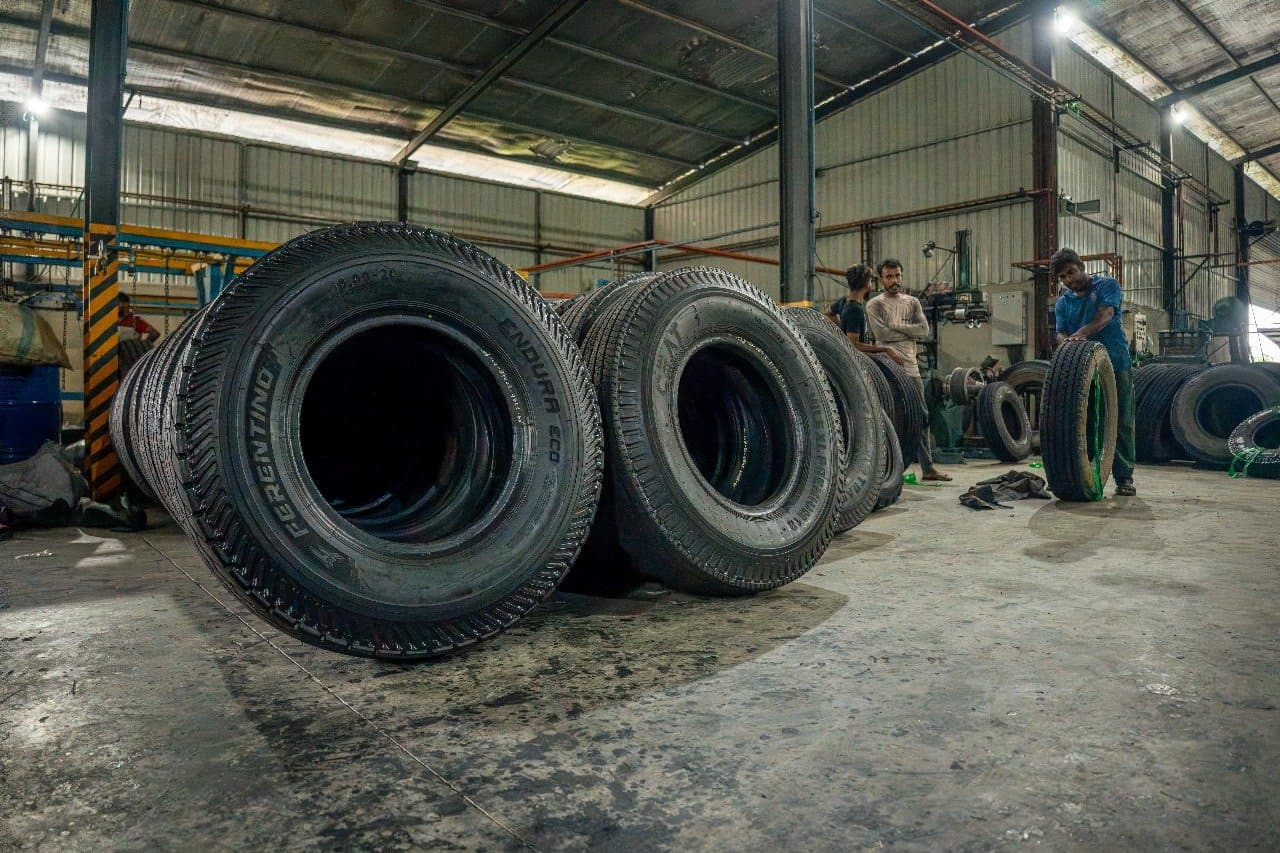
Precision Flap Production & Rim Assembly
In-house elastomer compounding, heavy commercial rim fitting, and dimensional quality control at Autoways.